Standard IPA vs Spoken IPA: What Changes in Natural Speech
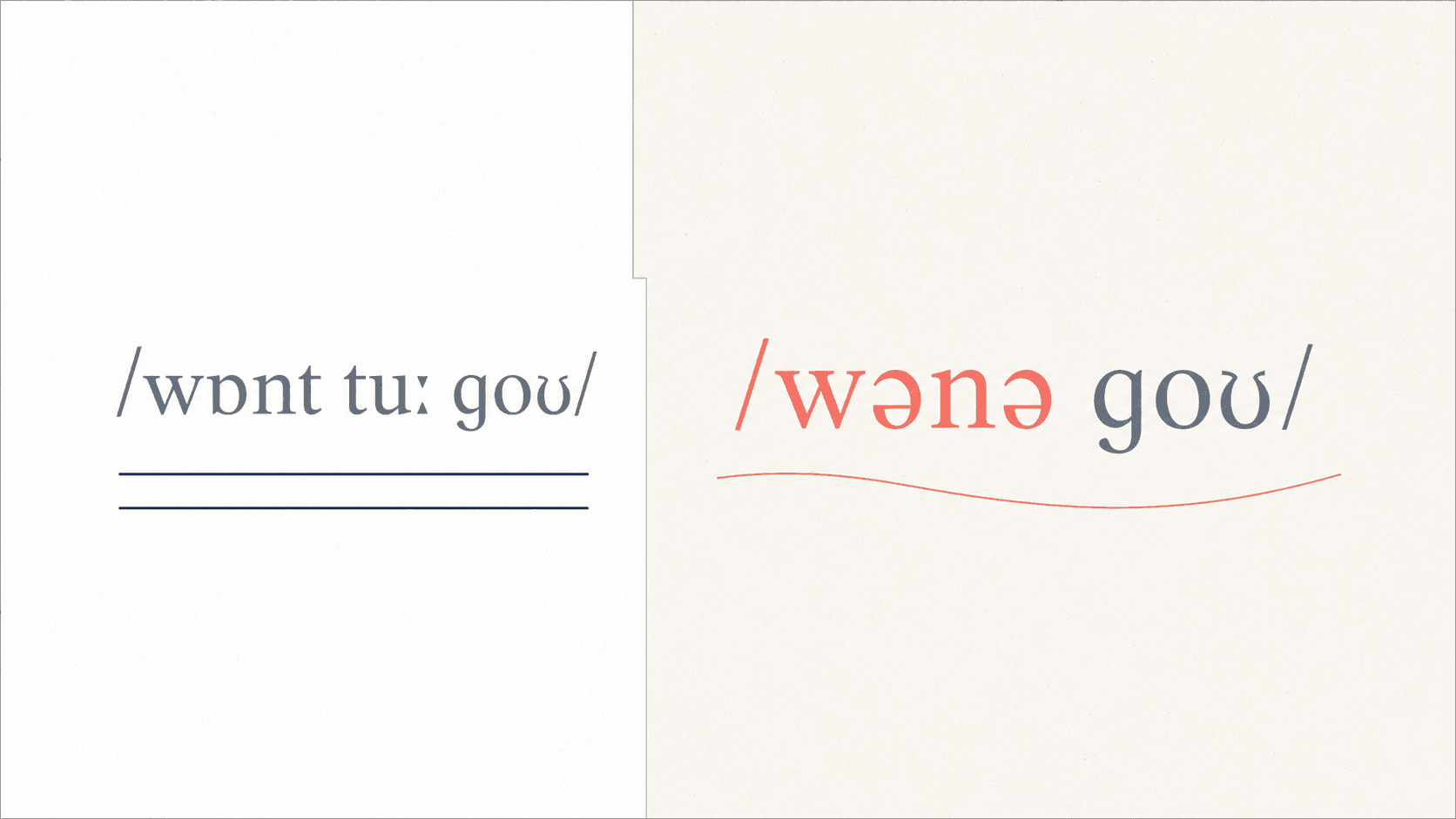
Standard IPA vs Spoken IPA, side by side: dictionary pronunciation on one line; weak forms, linking, and contractions on the other. Ten sentence examples.
Standard IPA transcribes each word in isolation; Spoken IPA shows how sounds change when words flow together in natural speech. Noticing that difference is one of the things that helps a careful-sounding learner move toward more natural-sounding speech.
If you've ever looked up a word in a dictionary, confirmed the IPA transcription, practiced it carefully, and then still couldn't understand a native speaker saying that exact word in a sentence, then you've already experienced the Standard IPA gap.
That gap has a name, and it's not a gap in your ability. It's a gap between two different things the same symbols are being asked to represent: how a word sounds in isolation, and how it sounds in motion. This article explains the difference, shows you exactly where the two diverge, and explains why Spoken IPA is the tool that bridges them.
What Is Standard IPA?
Standard IPA, sometimes called citation-form transcription, is how dictionaries represent pronunciation. Each word is transcribed as it would sound if spoken slowly, deliberately, and in complete isolation. It is the phonetic baseline: accurate, consistent, and enormously useful for learning individual sounds.
When a dictionary tells you "the" is /ðiː/, "can" is /kæn/, and "to" is /tuː/, those transcriptions are correct. They represent the strong form of each word: the version you'd produce if someone asked you to say the word by itself, clearly and carefully.
Standard IPA is a useful starting point for many learners. It gives you a reliable map of the English sound system, lets you look up unfamiliar words, and provides the phonetic vocabulary you need to discuss pronunciation at all. For beginners building their sound inventory, it is the right tool for the job.
The limitation appears the moment you move from isolated words to actual sentences. Real conversation doesn't sound like a sequence of dictionary entries read aloud. Standard IPA, by design, doesn't try to show you what does.
What Is Spoken IPA?
Spoken IPA transcribes language as it actually sounds in natural, connected speech. Rather than representing each word in its strong, isolated form, it reflects the phonological processes that occur when words flow into each other at normal conversational speed: vowels reduce, consonants link across word boundaries, sounds assimilate to their neighbors, and entire multi-word phrases compress into shorter units.
The same words that Standard IPA renders as /ðiː/, /kæn/, and /tuː/ become /ðə/, /kən/, and /tə/ in Spoken IPA, because in ordinary speech those grammar words are unstressed and their vowels reduce to schwa. Neither transcription is wrong. They are simply answering different questions: Standard IPA answers "how is this word pronounced?", while Spoken IPA answers "how does this sentence actually sound?"
For learners at B1 level and above, particularly those stuck at an intermediate plateau despite solid vocabulary and grammar, Spoken IPA can be especially useful. It makes visible patterns that native speakers apply largely automatically, and that many textbooks do not explicitly teach.
Detailed Comparison with Examples
The sections below show the transcription contrast for each major connected-speech process: Standard IPA on one side, Spoken IPA on the other. They focus on what changes on the page; for the full explanation of each rule, when it applies, and how to practice it, see our complete guide to connected speech rules.
Weak Forms
Weak forms are the reduced pronunciations of grammatical function words (articles, prepositions, auxiliaries, conjunctions, and pronouns) when they appear in unstressed positions in a sentence. The reduction usually involves replacing the full vowel with /ə/ (schwa) or dropping a sound entirely.
| Word | Standard IPA | Spoken IPA | Context |
|---|---|---|---|
| the | /ðiː/ | /ðə/ | "the cat" → /ðə kæt/ |
| can | /kæn/ | /kən/ | "I can do it" → /aɪ kən duːɪt/ |
| to | /tuː/ | /tə/ | "going to" → /ˈɡoʊɪŋ tə/ |
| and | /ænd/ | /ən/ | "fish and chips" → /fɪʃ ən tʃɪps/ |
| of | /ɒv/ | /əv/ or /ə/ | "cup of tea" → /kʌpə tiː/ |
| from | /frɒm/ | /frəm/ | "far from here" → /fɑːr frəm hɪər/ |
| his | /hɪz/ | /ɪz/ | "give his name" → /ɡɪv ɪz neɪm/ |
| them | /ðɛm/ | /ðəm/ | "tell them" → /tɛl ðəm/ |
The governing rule: function words are weak by default unless they carry contrastive or emphatic stress. "I can do it" (stressing "can" to contradict "can't") uses the strong form /kæn/. "I can do it" in ordinary conversation uses /kən/.
Liaison (Consonant-Vowel Linking)
When a word ending in a consonant sound is immediately followed by a word beginning with a vowel sound, the consonant naturally attaches to the following syllable. No pause occurs; the two words are produced as a single phonological unit.
| Standard IPA | Spoken IPA | What Links |
|---|---|---|
| /æn ˈæpəl/ | /ənˈæpəl/ | /n/ links to "apple" |
| /stɒp ɪt/ | /ˈstɒpɪt/ | /p/ links to "it" |
| /teɪk ɪt ˈiːzi/ | /ˈteɪkɪˈtiːzi/ | /k/ and /t/ both link forward |
| /lʊk ʌp/ | /ˈlʊkʌp/ | /k/ links to "up" |
The transcription difference is what matters here: Standard IPA preserves the space between words; Spoken IPA erases it. A learner reading the left column word-by-word tends to insert micro-pauses that fluent speech usually smooths over.
Flap T (American English)
In American English, the phoneme /t/ is realized as a voiced alveolar flap /ɾ/ when it appears between two vowel sounds (or between a vowel and a syllabic /r/). The result sounds closer to a soft, quick /d/ than to the aspirated /t/ of citation form.
| Word / Phrase | Standard IPA | Fluent speech (what you'll hear) |
|---|---|---|
| water | /ˈwɔːtɚ/ | /ˈwɔːɾɚ/ |
| butter | /ˈbʌtɚ/ | /ˈbʌɾɚ/ |
| better | /ˈbɛtɚ/ | /ˈbɛɾɚ/ |
| city | /ˈsɪti/ | /ˈsɪɾi/ |
| what do you | /wʌt duː juː/ | /ˈwʌɾə jə/ |
| a lot of | /ə lɒt ɒv/ | /ə ˈlɒɾə/ |
Notice that Standard IPA never shows /ɾ/ at all. The flap exists only in connected speech, so it is invisible in any dictionary transcription. This feature is primarily American; British English handles intervocalic /t/ differently. A transparency note: for the flap and the glottal stop, this article shows the fullest phonetic detail so you know what to listen for. IPAtranslator's Spoken IPA mode intentionally keeps the standard /t/ symbol in these positions, focusing its transcription on weak forms, linking, and contractions, the changes that alter which sounds you produce rather than how one sound is colored.
Glottal Stop
The glottal stop /ʔ/ is produced by a momentary closure of the vocal cords. In English, it most frequently replaces /t/ before consonants or in syllable-final position. It is prominent in British English and present in American English as well.
| Word / Phrase | Standard IPA | Fluent speech (what you'll hear) |
|---|---|---|
| button | /ˈbʌtən/ | /ˈbʌʔən/ |
| cat flap | /kæt flæp/ | /kæʔ flæp/ |
| network | /ˈnɛtwɜːrk/ | /ˈnɛʔwɜːrk/ |
| that person | /ðæt ˈpɜːrsən/ | /ðæʔ ˈpɜːrsən/ |
On the page, the contrast is a single symbol, /t/ versus /ʔ/. But for a learner trained only on the Standard column, that substitution is one of the most disorienting features of real speech. Where you expect a /t/, you hear a brief silence, and the word fails to register.
Reductions
Certain high-frequency multi-word combinations are so often compressed in natural speech that their spoken form is phonologically distinct from any word-by-word reading of the Standard IPA.
| Written Form | Standard IPA | Spoken IPA | Informal Spelling |
|---|---|---|---|
| going to | /ˈɡoʊɪŋ tuː/ | /ˈɡoʊnə/ | gonna |
| want to | /wɒnt tuː/ | /ˈwɒnə/ | wanna |
| out of | /aʊt ɒv/ | /ˈaʊɾə/ | outta |
| kind of | /kaɪnd ɒv/ | /ˈkaɪndə/ | kinda |
| have to | /hæv tuː/ | /ˈhæftə/ | hafta |
| a lot of | /ə lɒt ɒv/ | /ə ˈlɒɾə/ | — |
These are not errors or colloquialisms to be avoided in careful speech. They are the standard phonological output of normal English at conversational speed. Producing the unreduced forms in casual conversation sounds unnatural and overly formal in the same way that saying "I am going to" with full stress on every syllable does.
Why the Standard IPA Gap Matters for Fluency
The Standard IPA gap affects learners in two directions simultaneously, and both are worth understanding clearly.
For listening comprehension, a learner who has internalized only Standard IPA forms is essentially using the wrong decoding key. When a native speaker says /ˈwʌɾərjə ˈɡoʊnə duː/, a learner searching for /wʌt ɑːr juː ˈɡoʊɪŋ tuː duː/ will not find a match, and the sentence fails to parse. This is the experience of native speech "sounding too fast" or "all running together." The speed is rarely the problem; the mismatch between expected and actual phonological form is.
For speaking, the issue is rhythmic rather than segmental. English is a stress-timed language: stressed syllables occur at roughly regular intervals, and unstressed syllables, including all the weak forms and reduced function words, are compressed to maintain that rhythm. A learner who gives every syllable full weight and duration produces speech that is phonetically accurate but rhythmically wrong. It sounds deliberate and metronomic rather than fluent, regardless of how correct the individual sounds are.
This is the mechanism behind the intermediate plateau: the frustrating experience of knowing English well but not sounding like you do. Most learners at B1–B2 level have invested heavily in vocabulary and grammar, and comparatively little in the suprasegmental features of English: rhythm, stress, and connected speech. The plateau is not about vocabulary or grammar; it is about the gap between citation form and connected form. Deliberate exposure to connected-speech transcription is what closes it.
Full Sentence Comparison Table
The table below shows ten sentences in Standard IPA alongside an illustrative fluent-speech transcription, with the key connected-speech processes at work in each. The fluent-speech column shows one plausible realization in full phonetic detail, including the flap /ɾ/, so you know what to listen for. Actual realizations vary by speaker, dialect, stress, and speaking rate; IPAtranslator's Spoken IPA mode focuses its own output on weak forms, linking, and contractions.
| Sentence | Standard IPA | Fluent Speech (What You'll Hear) | Key Changes |
|---|---|---|---|
| What are you going to do about it? | /wʌt ɑːr juː ˈɡoʊɪŋ tuː duː əˈbaʊt ɪt/ | /ˈwʌɾərjə ˈɡoʊnə duː əˈbaʊɾɪt/ | Flap T, liaison, reduction of "going to" |
| I am going to get a cup of water. | /aɪ æm ˈɡoʊɪŋ tuː ɡɛt ʌ kʌp ɒv ˈwɔːtɚ/ | /aɪəm ˈɡoʊnə ˈɡɛɾə kʌpə ˈwɔːɾɚ/ | Weak forms, flap T, reductions |
| Can you give me a little bit of butter? | /kæn juː ɡɪv miː ə ˈlɪtəl bɪt ɒv ˈbʌtɚ/ | /kənjə ˈɡɪvmi ə ˈlɪɾəl bɪɾəv ˈbʌɾɚ/ | Weak form "can", liaison, flap T throughout |
| He is going to be out of the office. | /hiː ɪz ˈɡoʊɪŋ tuː biː aʊt ɒv ðə ˈɒfɪs/ | /hiːz ˈɡoʊnə bi ˈaʊɾə ðə ˈɒfɪs/ | Contraction, reduction, flap T |
| It is a matter of time and effort. | /ɪt ɪz ə ˈmæɾɚ ɒv taɪm ænd ˈɛfɚt/ | /ɪɾɪz ə ˈmæɾɚ ə taɪm ən ˈɛfɚt/ | Liaison, weak forms, flap T |
| I want to get out of here right now. | /aɪ wɒnt tuː ɡɛt aʊt ɒv hɪər raɪt naʊ/ | /aɪ ˈwɒnə ɡɛ ˈdaʊɾə hɪər raɪ naʊ/ | Reduction "want to", flap T, liaison |
| She told him to stop it immediately. | /ʃiː toʊld hɪm tuː stɒp ɪt ɪˈmiːdiətli/ | /ʃiː ˈtoʊldɪm tə ˈstɒpɪt ɪˈmiːdiətli/ | Liaison, weak form "to" |
| There is a kind of magic to it. | /ðɛər ɪz ə kaɪnd ɒv ˈmæɡɪk tuː ɪt/ | /ðərɪz ə ˈkaɪndə ˈmæɡɪk tʊɪt/ | Weak forms, reduction "kind of", liaison |
| You have got to be kidding me. | /juː hæv ɡɒt tuː biː ˈkɪdɪŋ miː/ | /jə həv ˈɡɒɾə bi ˈkɪɾɪŋ mi/ | Weak forms, flap T, reduction |
| Let me know as soon as you can. | /lɛt miː noʊ æz suːn æz juː kæn/ | /lɛtmi noʊ əz suːn əz jə kən/ | Liaison, weak forms throughout |
Reading down the fluent-speech column, the pattern becomes clear: function words tend to reduce, /t/ often flaps or stops in many American English varieties, and word boundaries frequently dissolve through linking. These are not random variations. They are rule-governed patterns that recur across sentences like these, varying with stress, pace, and dialect.
How IPAtranslator Shows Both Modes
Most learners have only ever had access to Standard IPA, because until recently that was the only mode most transcription tools offered. IPAtranslator is built around the distinction between the two.
In Standard IPA mode, the tool transcribes each word in citation form, exactly as a dictionary would. This is the right mode when you want to check the pronunciation of an unfamiliar word, study individual sounds, or build your foundational phonetic knowledge. For learners working through our beginner's guide to IPA, Standard mode is the natural starting point.
In Spoken IPA mode, the tool applies connected-speech rules to the entire input sentence, highlighting the patterns most useful to learners: weak forms, linking, and common contractions. You can toggle between the two display modes for any sentence and see which of these changes apply. It is a learning-oriented representation, not a full narrow phonetic transcription of every sound detail in a particular speaker's speech.
TTS playback gives you an audio reference for your original text alongside both transcriptions. Read the Standard IPA, read the Spoken IPA, then listen to the audio and check which of the patterns you can actually hear. That connects what the symbols predict with what reaches your ear.
How Other Tools Compare
Many IPA transcription tools available online, including tophonetics.com, which is widely used and genuinely useful for Standard IPA lookup, provide citation-form transcription only. They show you how each word sounds in isolation, which is valuable for word-level pronunciation work. What they do not show is how those words transform when they flow together in a sentence.
This is not a criticism of those tools. Standard IPA transcription is what most learners initially need, and tophonetics.com does it reliably. The limitation only becomes apparent when a learner moves beyond individual word pronunciation and starts working on sounding natural in conversation. At that point, a tool that only shows citation form stops being sufficient.
IPAtranslator's Spoken IPA mode fills that gap directly. It generates connected-speech IPA transcription alongside Standard IPA, making the comparison between the two immediately visible. For learners serious about fluency, and for teachers looking for a resource that explicitly addresses the intermediate plateau, that distinction is the entire point. For a practical walkthrough of how to use Spoken IPA as a practice tool, see our guide on connected speech rules and how to practice them.
Frequently Asked Questions
Both are correct; they answer different questions. Standard IPA shows how a word is pronounced in isolation; Spoken IPA shows how it sounds in connected speech. Neither is more "real" than the other. Standard IPA is the right tool for learning individual sounds; Spoken IPA is the right tool for understanding and producing natural fluent speech.
Start with Standard IPA. You need the foundational sound inventory and symbol system before connected-speech patterns will make sense. Once you're comfortable with individual sounds at around B1–B2 level, adding Spoken IPA is the natural next step toward sounding genuinely fluent.
Yes, though some features differ. Weak forms and liaison apply in both American and British English. The flap T /ɾ/ is primarily American; British English uses the glottal stop /ʔ/ more extensively in similar environments. IPAtranslator's Spoken IPA mode supports both varieties. Select your target accent in the settings before generating a transcription.
The tool applies a rule-based phonological engine to the input text, modeling the connected-speech patterns most useful to learners: weak form substitution, consonant-vowel linking, and common contractions and reductions. It focuses on changes that alter which sounds you produce, and deliberately does not transcribe finer phonetic detail such as the flap /ɾ/ or the glottal stop /ʔ/.
Yes, and it is particularly effective for intermediate and advanced learners who have already mastered individual sounds. The toggle between Standard and Spoken modes makes the connected-speech rules visible and concrete rather than abstract, which is useful both for self-study and for classroom demonstration. Many teachers use the side-by-side comparison as a starting point for connected speech lessons.
Conclusion
Standard IPA is the foundation. It gives you the sound system, the symbols, and the baseline you need to work with English pronunciation at all. Spoken IPA is the bridge: it shows you what actually happens when those sounds move at conversational speed, across word boundaries, in the mouth of a native speaker.
The gap between the two is not a flaw in either system. It is simply the difference between a map drawn at rest and a map drawn in motion. Fluency requires both.
Try both modes free at IPAtranslator. Paste in a sentence, toggle between Standard and Spoken IPA in the display, and use the TTS audio as your listening reference.
Author

Categories
More Posts
Respelling vs IPA: The Easier Option If Symbols Confuse You
Learn what pronunciation respelling is, how it differs from IPA, and when an easy-to-read pronunciation guide is more useful than phonetic symbols.
How to Pronounce "To" in English: Strong Form vs Weak Form
Learn how to pronounce "to" in English: strong form /tuː/, weak form /tə/, and the in-between /tʊ/ sound native speakers often use.
What Is the IPA? How to Read Pronunciation, Not Guess It
The International Phonetic Alphabet is a standardized notation for speech sounds — a more consistent guide than spelling. Read IPA with a chart and examples.
Newsletter
Join the community
Subscribe for English pronunciation tips and product updates