What Is the IPA? How to Read Pronunciation, Not Guess It
The International Phonetic Alphabet is a standardized notation for speech sounds — a more consistent guide than spelling. Read IPA with a chart and examples.
The IPA is a standardized notation system for speech sounds. In a learner dictionary, it gives you a far more consistent guide to pronunciation than English spelling: one you can read instead of guessing.
Have you ever looked up a word in a dictionary and noticed those strange symbols in slashes next to it, like /ˈnɒlɪdʒ/ for "knowledge"? Those symbols are the International Phonetic Alphabet, and once you learn to read them, guessing pronunciation from spelling stops being your only option. This guide walks you through everything you need to know as a complete beginner, with concrete examples and a free transcription tool, IPAtranslator, that you can start using today.
By the end of this guide you will know what the IPA is, how to read its consonants, vowels, and diphthongs, and how to use it to check and correct pronunciation as you meet new words.
What Is the International Phonetic Alphabet?
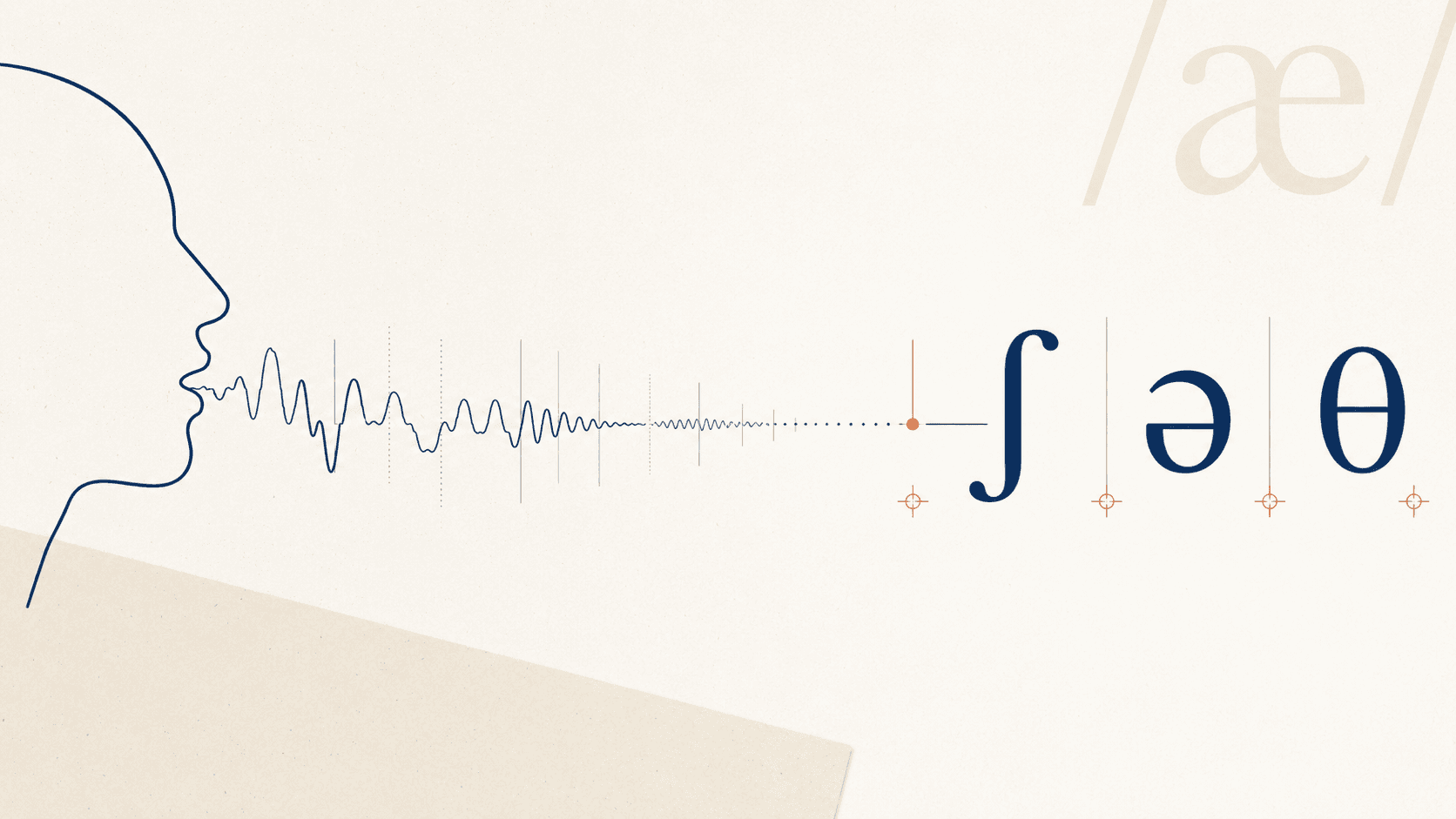
The International Phonetic Alphabet, usually shortened to IPA, is a standardized notation system that uses symbols and modifiers to represent speech sounds. In learner dictionaries, it gives a far more consistent guide to pronunciation than English spelling, though the level of phonetic detail depends on the transcription system and the accent being represented. That consistency is what makes IPA so useful.
The IPA was created in the late 1880s by a group of language teachers in France and Britain. Their goal was simple but ambitious: build a tool that would let teachers and learners describe pronunciation precisely, no matter which language they were working with. Today, the IPA is the global standard used by linguists, dictionary publishers, language teachers, actors, and speech therapists around the world.
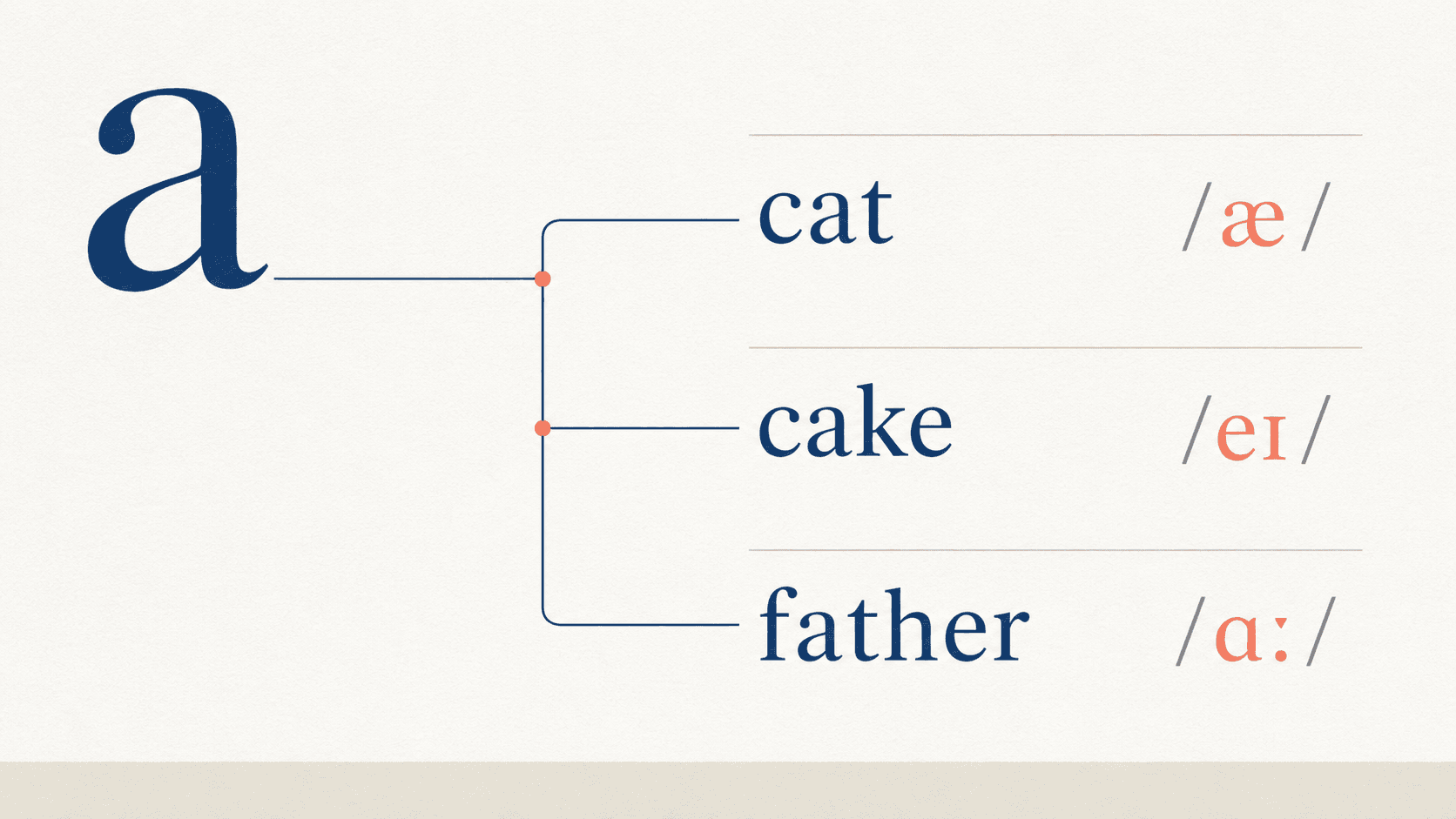
What makes IPA different from regular English spelling is consistency. In English, the letter "a" can sound completely different in "cat," "father," "about," and "make." In IPA, each of those sounds gets its own symbol within the transcription system your dictionary uses. When you see /æ/, you know which sound is intended; when you see /ɑː/, you know it marks a different one. The transcription gives you a reliable guide to the target, with the caveat that the exact realization varies with accent and the transcription convention being used.
Why IPA Matters for English Learners
English is famous, or perhaps infamous, for having spelling that does not match pronunciation. Take the classic trio: "though," "through," and "thought." All three contain the letters "ough," yet each one is pronounced completely differently. Without a reliable guide, learners are left memorizing exceptions one by one. That is why words like these also dominate any list of hard words to pronounce in English.
This is exactly where IPA earns its keep. Instead of trusting English spelling to tell you how to say a word, you can look at its IPA transcription and know with certainty how it sounds:
- though → /ðəʊ/
- through → /θruː/
- thought → /θɔːt/
Three clear, distinct transcriptions for three clear, distinct pronunciations. Beyond just looking up individual words, IPA is a foundational tool for accent reduction and speech clarity. When you can see the difference between the sound in "ship" /ʃɪp/ and "sheep" /ʃiːp/, you can train your mouth to produce that difference reliably.
If you want to skip ahead and try this in practice, paste any English sentence into IPAtranslator and you will get an IPA transcription with audio playback in seconds.
How to Read IPA Symbols and the IPA Chart
IPA looks intimidating at first, but the system is more logical than it appears. English uses about 44 distinct sounds, which means you only need to learn around 44 IPA symbols to transcribe any English word. Let's break them down into consonants, vowels, and diphthongs.
Consonants
Many English consonant symbols look just like the letters you already know. The sounds /p/, /b/, /t/, /d/, /k/, /g/, /f/, /v/, /s/, /z/, /m/, /n/, /l/, /r/, /w/, /h/, and /j/ behave roughly as you would expect, although /j/ is the "y" sound at the start of "yes" and /g/ is always the hard g of "go," never the soft g of "giraffe."
A handful of consonant sounds get unique symbols because English spelling uses letter combinations to write them:
| Symbol | Sound | Example |
|---|---|---|
| /ʃ/ | "sh" | ship |
| /ʒ/ | "zh" | measure |
| /tʃ/ | "ch" | church |
| /dʒ/ | "j" | judge |
| /θ/ | voiceless "th" | think |
| /ð/ | voiced "th" | this |
| /ŋ/ | "ng" | sing |
Vowels
Vowels are where IPA truly shines, because English vowel spelling is wildly inconsistent. Linguists usually divide English vowels into short vowels, long vowels, and diphthongs.
Short vowels:
- /ɪ/ as in "sit"
- /ɛ/ as in "bed"
- /æ/ as in "cat"
- /ʌ/ as in "cup"
- /ɒ/ as in "hot" (British English)
- /ʊ/ as in "put"
- /ə/ as in the first syllable of "about"
That last one, the schwa /ə/, is the most common vowel in English and appears in nearly every unstressed syllable.
Long vowels are marked with a triangular colon /ː/ to show extra length:
- /iː/ as in "see"
- /ɑː/ as in "father"
- /ɔː/ as in "saw"
- /uː/ as in "blue"
- /ɜː/ as in "bird"
Diphthongs
A diphthong is a vowel sound that glides smoothly from one position to another within a single syllable. Your tongue starts in one place and finishes in another, and the result feels like a single sound even though two vowel qualities are involved.
| Diphthong | Example |
|---|---|
| /eɪ/ | day |
| /aɪ/ | my |
| /ɔɪ/ | boy |
| /aʊ/ | now |
| /əʊ/ | go |
| /ɪə/ | near |
| /eə/ | hair |
| /ʊə/ | pure |
Try saying "boy" slowly and you can feel your mouth move from the /ɔ/ position to the /ɪ/ position. That gliding motion is exactly what the two-symbol notation captures.
IPA vs English Spelling
The clearest way to appreciate IPA is to put it next to English spelling and watch the chaos disappear. Below are eight common words whose spelling gives almost no reliable hint about pronunciation.
| English Word | IPA Transcription | What's Going On |
|---|---|---|
| knight | /naɪt/ | The "k" and "gh" are silent |
| colonel | /ˈkɜːnəl/ | Pronounced like "kernel" |
| Wednesday | /ˈwɛnzdeɪ/ | The first "d" disappears |
| choir | /ˈkwaɪə/ | "ch" sounds like /kw/ |
| receipt | /rɪˈsiːt/ | The "p" is silent |
| island | /ˈaɪlənd/ | The "s" is silent |
| queue | /kjuː/ | Four silent letters out of five |
| psychology | /saɪˈkɒlədʒi/ | The "p" is silent |
This is precisely why every major dictionary, from Oxford to Cambridge, includes IPA transcriptions next to its entries. The spelling tells you the word's history; the IPA tells you how to actually say it.
Curious about why those two dictionaries sometimes give different IPA symbols for the same word? That's a story going back a hundred years. We cover it in our guide on why dictionaries disagree on IPA.
How to Use IPA for Pronunciation Practice
Learning IPA is not about memorizing a chart for its own sake. The real value comes from using it as a daily tool. Here is a simple workflow that works for learners at any level:
- Find the IPA transcription of a word you want to practice. A good dictionary will give it to you, or you can paste full sentences into IPAtranslator; our step-by-step guide covers every feature.
- Break the transcription into individual sounds. Work through it symbol by symbol; in a learner dictionary's system this is straightforward once you know the symbols.
- Match each symbol to the sound it stands for, using the consonant, vowel, and diphthong lists above as your reference.
- Practice the word out loud, paying close attention to any sounds that differ from your native language.
- Listen and repeat. Pair your IPA reading with audio whenever possible. Seeing the symbols and hearing the sounds at the same time builds the connection far faster than either method alone.
A great next step is to try transcribing entire sentences rather than just single words, because that's where pronunciation gets interesting. In real speech, words don't sit in isolation; they blend, link, and reduce in ways that single-word transcriptions don't show.
Common Mistakes Beginners Make with IPA
Even motivated learners run into the same handful of pitfalls when they first start using IPA. Watch out for these:
- Treating IPA letters like English letters. The symbol /j/ is not the English letter "j"; it's the "y" sound in "yes." Likewise, /e/ is the vowel in "bed," not the English letter name.
- Ignoring stress marks. The little vertical mark before a syllable, as in /ˈhæpi/, tells you which syllable is stressed. Mispronouncing stress can make a word unrecognizable to native ears.
- Skipping the schwa. Beginners often try to pronounce every vowel "fully," but English compresses unstressed vowels into the schwa /ə/. Saying "banana" as /bəˈnɑːnə/ instead of /bæˈnænæ/ is what makes you sound natural.
- Memorizing the chart without using it. IPA only sticks when you apply it to real words and sentences. Read transcriptions out loud daily, even just five minutes a day.
Frequently Asked Questions
IPA is much easier than most beginners expect. Within a learner dictionary's system, the symbols behave far more consistently than English spelling, and there are no silent letters to memorize. The commonly used English inventory is around 44 symbols, and progress comes fastest when you apply them to real words rather than studying them in isolation.
No, you do not need to memorize every symbol in the full IPA chart. The complete chart covers sounds from every language in the world, but for English you only need around 44 symbols. Focus on those, and you will be able to read any English transcription confidently.
The IPA system itself is universal: a given symbol represents the same sound no matter which language is being transcribed. However, different languages use different subsets of the chart, since no single language uses every possible human sound. The Spanish /r/, the French nasal vowels, and the English /θ/ all have their own symbols within the same shared system.
Most learners can read basic English IPA transcriptions after about 10 to 20 hours of focused practice. Producing the sounds accurately, especially ones that don't exist in your native language, takes longer and depends on regular speaking practice. The reading skill comes quickly; the speaking skill grows with use.
Yes, IPA is one of the most effective tools for accent work. By comparing the IPA transcription of how you currently say a word with the transcription of the target accent, you can identify exactly which sounds need adjustment. Speech coaches and accent trainers use IPA daily for this reason.
The easiest way is to start small and use a free transcription tool. Pick five English words you struggle with, paste them into IPAtranslator, read the IPA out loud, and listen to the audio playback. Repeat for ten minutes a day, and the symbols will start to feel natural sooner than you expect.
Because different dictionaries follow different editorial conventions. Oxford and Cambridge, for example, use slightly different symbols for the same English vowels. Both are correct; they just reflect different traditions in English phonetic transcription. We explore the full story in our deeper guide on why dictionaries disagree on IPA.
Conclusion
The International Phonetic Alphabet turns the messy, unpredictable spelling of English into something reliable and learnable. With around 44 symbols, you gain a tool that helps you read the pronunciation of unfamiliar words, train your ear to hear subtle differences, and shape your own speech with more precision. The investment is small, and the payoff lasts for the rest of your language-learning life.
The best way to learn IPA is to use it. Pick a few words you have always struggled to pronounce, look up their transcriptions, and say them out loud. When you are ready to move beyond single words, IPAtranslator transcribes full sentences, complete with Spoken IPA mode for connected speech and built-in audio playback of your text. The symbols may look strange right now, but with regular use they will feel like old friends.
Author
Categories
More Posts
How to Pronounce "To" in English: Strong Form vs Weak Form
Learn how to pronounce "to" in English: strong form /tuː/, weak form /tə/, and the in-between /tʊ/ sound native speakers often use.
Connected Speech: Rules, Examples, and Why Word-by-Word Fails
Connected speech patterns explained with IPA — weak forms, linking, assimilation, elision, the flap — and practice steps for hearing and producing each one.
How to Use IPAtranslator: Full Sentences to IPA in One Pass
Paste full sentences, scripts, or paragraphs and get IPA in one pass — a step-by-step guide to IPAtranslator's Standard IPA, Spoken IPA, and TTS features.
Newsletter
Join the community
Subscribe for English pronunciation tips and product updates