How to Speak in Public Confidently: A 7-Step Guide
Rehearse out loud, mark your script's rhythm, steady your pacing and nerves — then learn how to speak in public confidently in 7 steps with a free-to-try tool.
To speak in public confidently, rehearse out loud with a script, practice how full sentences actually sound rather than isolated words, slow your pace with deliberate pauses, and control your breathing before you start. Confidence comes from rehearsal that matches real speech, not silent reading.
You know the feeling. The slides are done, the notes are solid, and the words flow perfectly when you read them at your desk. Then you stand up in front of the room and everything changes: your pace doubles, your voice tightens, and sentences you have read twenty times suddenly feel foreign in your mouth.
That gap between how prepared you are and how confident you sound is not a personality flaw. It is a practice problem, and practice problems have fixes. This guide walks you through seven concrete steps to speak in public confidently, from scripting your opening to rehearsing the way English is actually spoken, plus the common mistakes that quietly undermine well-prepared speakers.
Why Public Speaking Feels So Hard
Fear of public speaking, formally called glossophobia, consistently ranks among the most commonly reported fears in surveys, frequently ahead of heights, insects, and flying. If speaking to a room makes your heart race, you are in the statistical majority, not the anxious minority.
The physiology is straightforward. Standing in front of an audience triggers an adrenaline response: faster heartbeat, shallower breathing, a dry mouth. A moderate amount of that arousal actually sharpens performance, a relationship psychologists describe with the Yerkes–Dodson law. The trouble starts when arousal passes the useful peak, because the first casualties are exactly the skills speaking depends on: breath control, pacing, and clear articulation.
This is why "just be confident" is useless advice. Public speaking confidence is not a mood you summon on stage. It is the byproduct of rehearsal realistic enough to survive adrenaline. Every step below is built around that principle.
The Gap Between Written and Spoken English
Here is the part most public speaking tips skip: the script you practice from is written English, but the thing you deliver is spoken English, and they behave differently in your mouth.
In natural speech, fluent speakers reduce function words, link sounds across word boundaries, and merge syllables. Linguists group these patterns under the term connected speech. "Thank you for coming" is not delivered as four careful dictionary words; "for" reduces to /fər/ and the phrase flows as one unit. When you rehearse by reading silently, or by over-pronouncing each word, you are training a version of the talk you will never actually give.
If you want the full system behind these changes, our in-depth guide to connected speech walks through every rule with examples, so you can predict how any sentence will sound before you say it.
The table below shows the difference on phrases you might open a presentation with. The Dictionary IPA column is how each word appears in isolation; the Spoken IPA column is how the phrase comes out in fluent delivery.
| Written phrase | Dictionary IPA (word by word) | Spoken IPA (fluent delivery) | What changes |
|---|---|---|---|
| thank you for coming | /θæŋk juː fɔːr ˈkʌmɪŋ/ | /θæŋk ju fər ˈkʌmɪŋ/ | "for" reduces to /fər/ |
| we can start | /wiː kæn stɑːrt/ | /wi kən stɑːrt/ | "can" weakens to /kən/ |
| the agenda | /ðə əˈdʒendə/ | /ði əˈdʒendə/ | "the" becomes /ði/ and links into the vowel |
| I'd like to begin | /aɪd laɪk tuː bɪˈɡɪn/ | /aɪd laɪk tə bɪˈɡɪn/ | "to" reduces to /tə/ |
| data and results | /ˈdeɪtə ænd rɪˈzʌlts/ | /ˈdeɪtə ən rɪˈzʌlts/ | "and" compresses to /ən/ |
That last row is a good example of how "to" is actually pronounced — our how "to" is actually pronounced guide breaks down the strong form, weak form, and the in-between sound native speakers use.
You do not need a linguistics degree to use this. A free IPA translator can transcribe your exact script, and a spoken-IPA view shows where your sentences reduce and link, so you rehearse the version of the talk your audience will actually hear.
How to Speak in Public Confidently: 7 Steps
Here is the full sequence. Each step is expanded below.
- Script your opening and closing, not the whole talk
- Rehearse out loud, on your feet
- Mark how your sentences actually sound
- Slow down and plan your pauses
- Steady your breathing before you speak
- Do a low-stakes dress rehearsal
- Prepare for questions, not perfection
1. Script your opening and closing, not the whole talk
The first minute of a talk carries the most anxiety and sets your pace for everything after it, so write your opening sentences word for word and learn them cold. Do the same for your closing lines, because a strong finish is what the room remembers. For the middle, work from an outline of key points instead. A fully memorized script creates a single point of failure: forget one sentence and the whole structure wobbles. An outline lets you speak to ideas, which is what conversational delivery sounds like.
2. Rehearse out loud, on your feet
Silent read-throughs train your eyes, not your mouth. Stand up, project at the volume you will actually use, and deliver the talk to the empty room. The first out-loud run always exposes sentences that looked fine on paper but tangle when spoken (this is the step most people skip, and it shows). If rehearsing to nobody feels awkward, treat that as confirmation it is working: you are meeting the physical version of your talk for the first time, and it is far better to meet it now than on stage.
3. Mark how your sentences actually sound
Go through your script and identify where fluent delivery differs from the written words: which function words reduce, which sounds link, which technical terms or names need deliberate care. These are your rehearsal targets, and drilling them specifically is far more efficient than repeating the whole talk end to end. IPAtranslator does this mapping for you: paste your script, get the spoken-IPA version of every sentence, and compare it against the dictionary form. If IPA symbols feel like a barrier at first, the respelling display writes pronunciations in plain letters instead.
4. Slow down and plan your pauses
Adrenaline compresses your sense of time, so a nervous speaker's "normal" pace sounds rushed to the room. Counter it structurally: mark pause points in your notes after key claims, before transitions, and after any question you pose to the audience. A pause that feels uncomfortably long on stage sounds like composure from a seat. Pausing also protects your breathing and gives listeners time to absorb the point you just made, which is the entire reason you are speaking.
5. Steady your breathing before you speak
Shallow chest breathing raises your pitch, shortens your phrases, and feeds the physical feedback loop of nervousness. In the minutes before you are introduced, breathe slowly and deeply into your belly, extending the exhale longer than the inhale. Slow, controlled breathing activates the body's relaxation response and blunts the stress reaction, as Harvard Health explains. Then take one deliberate breath after you reach the front of the room, before your first word. Nobody perceives that second of silence except you.
6. Do a low-stakes dress rehearsal
Record yourself on your phone, or deliver the talk to one trusted listener. Then review the recording for three things only: pace, dropped word endings, and the transitions between sections. The camera feels harsher than any audience, which is exactly why it works; a talk that survives your own playback will feel easier in the actual room. One full recorded run-through teaches you more than five silent read-throughs.
7. Prepare for questions, not perfection
List the five questions you would ask if you were in the audience, and sketch a one-sentence answer to each. Knowing the hard questions are covered removes a major background anxiety while you speak. And drop the perfection standard entirely: audiences do not grade fluency, they follow ideas. A stumble you recover from calmly reads as composure, not failure, and treating the talk as a structured conversation is what confident speakers actually do.
Common Public Speaking Mistakes to Avoid
Over-pronouncing every word. It sounds careful in rehearsal and hesitant on stage. This happens when speakers equate "clear" with "isolated dictionary pronunciation," but fluent English relies on reductions and linking, and fighting them makes delivery sound halting. Fix it by rehearsing the spoken form of your sentences, not the word-by-word form, using the comparison approach from step 3.
Speeding up to get it over with. The audience hears anxiety in the pace long before they process the content. It happens because adrenaline distorts your internal clock. The fix is mechanical, not emotional: physical pause marks in your notes, and a deliberately slow first paragraph that sets the tempo while your nerves settle.
Practicing the slides instead of the transitions. Most live stumbles happen between sections, not inside them, because that is the one part the slides do not script for you. Rehearse the segue sentences ("that brings us to the cost side") as deliberately as the content itself.
Treating nerves as a defect. Trying to eliminate the adrenaline entirely sets an impossible goal and makes every heartbeat feel like failure. The arousal itself is fuel; it only hurts past the peak. Aim your preparation at keeping it in the useful range through breathing and rehearsal, not at feeling nothing.
Frequently Asked Questions
Confidence comes from realistic rehearsal, not personality. Script your opening and closing, rehearse out loud at full volume, practice the spoken rhythm of your sentences, and complete at least one recorded run-through. Each rehearsal that resembles the real event lowers the novelty your nerves react to.
Slow your breathing before you start, extending each exhale, and open with the sentences you have memorized cold at a deliberately slow pace. Voice shake is driven by adrenaline and shallow breathing, and it typically settles once you are a minute in and your opening has landed.
A hybrid works best for most speakers. Memorize your opening and closing word for word, and deliver the middle from a keyword outline. Full memorization creates a single point of failure, while pure improvisation wastes energy on sentence construction that you could spend on delivery.
Adrenaline changes the mechanics of your speech. Shallow breathing raises your pitch and shortens your phrases, a rushed pace strips out the pauses listeners need, and tension flattens the natural reductions and linking of fluent delivery. Rehearsing out loud under mild pressure trains those mechanics to hold.
A practical benchmark: you can deliver your opening and closing without notes, you have completed three full out-loud run-throughs, and at least one of them was recorded and reviewed. Past that point, targeted practice on your hardest sentences beats additional full repetitions.
Yes, because uncertainty about specific words and sentences is one of the most concrete sources of speaking anxiety. When you have rehearsed how a technical term, a name, or a full sentence actually sounds in connected speech, that background worry disappears and your attention returns to the audience.
Conclusion: Confidence Is a Rehearsal Strategy
Speaking in public confidently is not a trait you are born with; it is the predictable result of rehearsal that matches real conditions: out loud, on your feet, at the spoken rhythm of real English, with your pauses and your breathing planned. Start with your next talk's opening paragraph. Practice your script in spoken IPA and see where your sentences reduce, link, and flow. You can try it without a credit card; available credits depend on whether you are visiting anonymously or using a free account.
Author

Categories
More Posts
How to Use IPAtranslator: Full Sentences to IPA in One Pass
Paste full sentences, scripts, or paragraphs and get IPA in one pass — a step-by-step guide to IPAtranslator's Standard IPA, Spoken IPA, and TTS features.
Standard IPA vs Spoken IPA: What Changes in Natural Speech
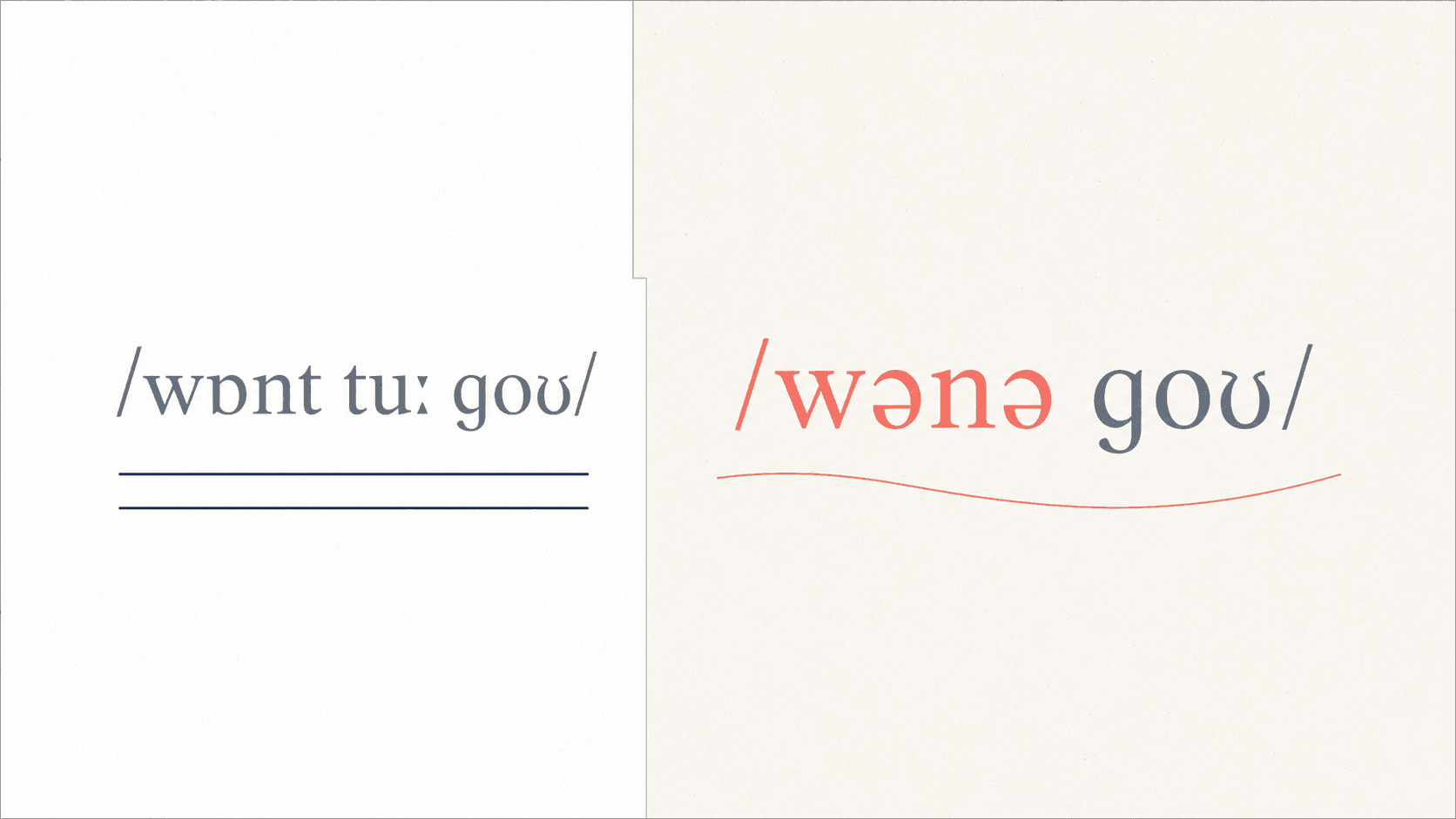
Standard IPA vs Spoken IPA, side by side: dictionary pronunciation on one line; weak forms, linking, and contractions on the other. Ten sentence examples.
Connected Speech: Rules, Examples, and Why Word-by-Word Fails
Connected speech patterns explained with IPA — weak forms, linking, assimilation, elision, the flap — and practice steps for hearing and producing each one.
Newsletter
Join the community
Subscribe for English pronunciation tips and product updates